Connect with shoppers, anywhere.
The Ask.
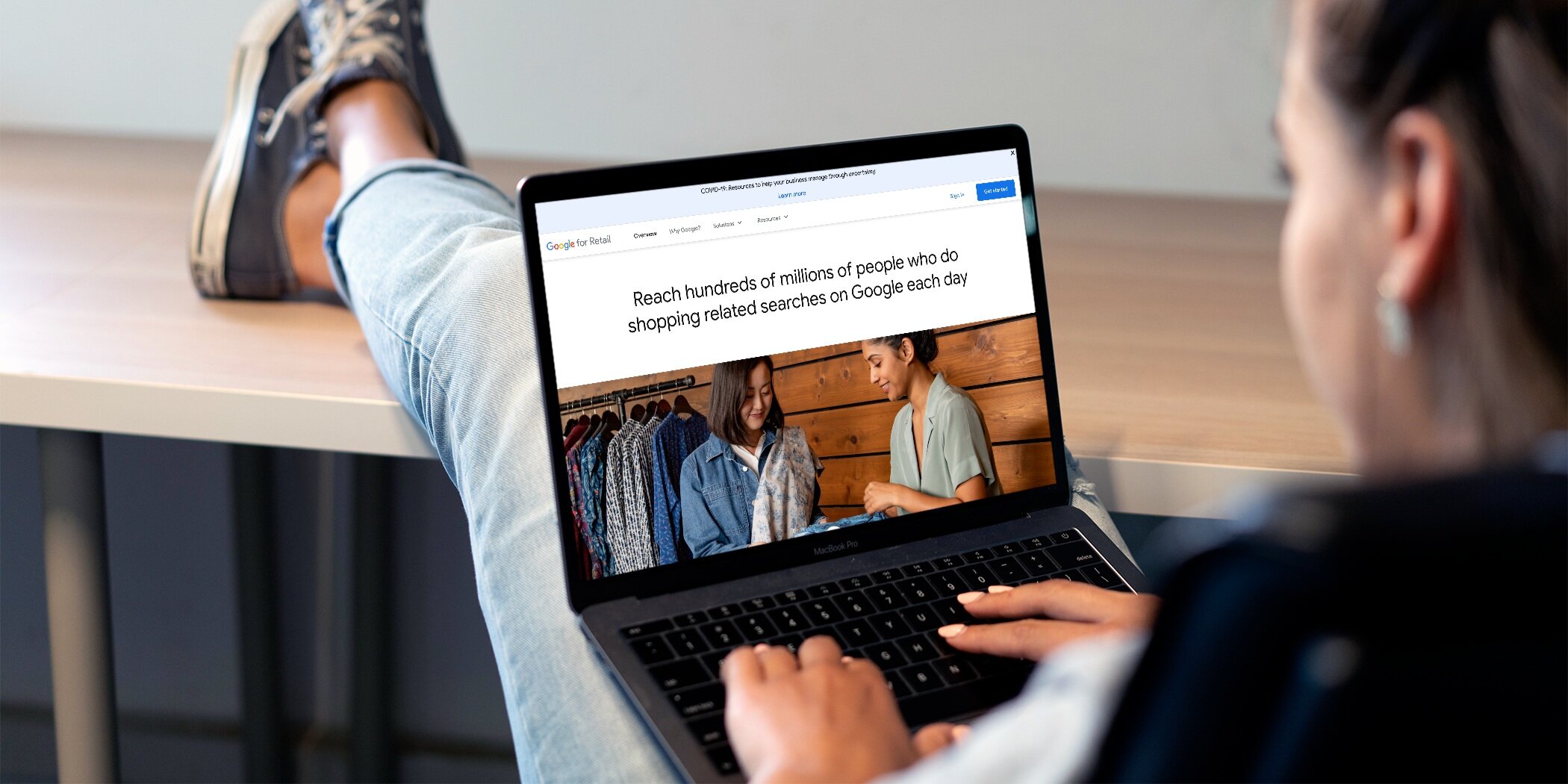
Google housed its merchant advertising solutions on a platform called Google for Retail.
As the product expanded, the site needed to expand with it.
I joined as lead copywriter to help evolve the platform’s messaging—making increasingly sophisticated solutions easier for businesses to understand and, ultimately, easier to act on.
The Challenge.
The site had accumulated years of updates.
The result was familiar: dense pages, layers of jargon, and technical language that explained the product without always explaining its value.
The audience was broad, from small businesses to enterprise retailers.
But the copy tended to speak about the product rather than to the person trying to use it.
There was another problem underneath that one.
The workflow was brief-led and module-driven. Language was inherited from previous work, dropped into new layouts, and iterated from there.
Nobody was really stepping back to ask:
What does this page need to say?
The Insight.
Confusing pages don’t always have too much information.
Often, they just don’t have enough hierarchy.
The opportunity was to rebuild the narrative from the user’s point of view—before design decisions hardened around it.
If we could establish the story first, the modules would have a reason to exist.
My Solution.
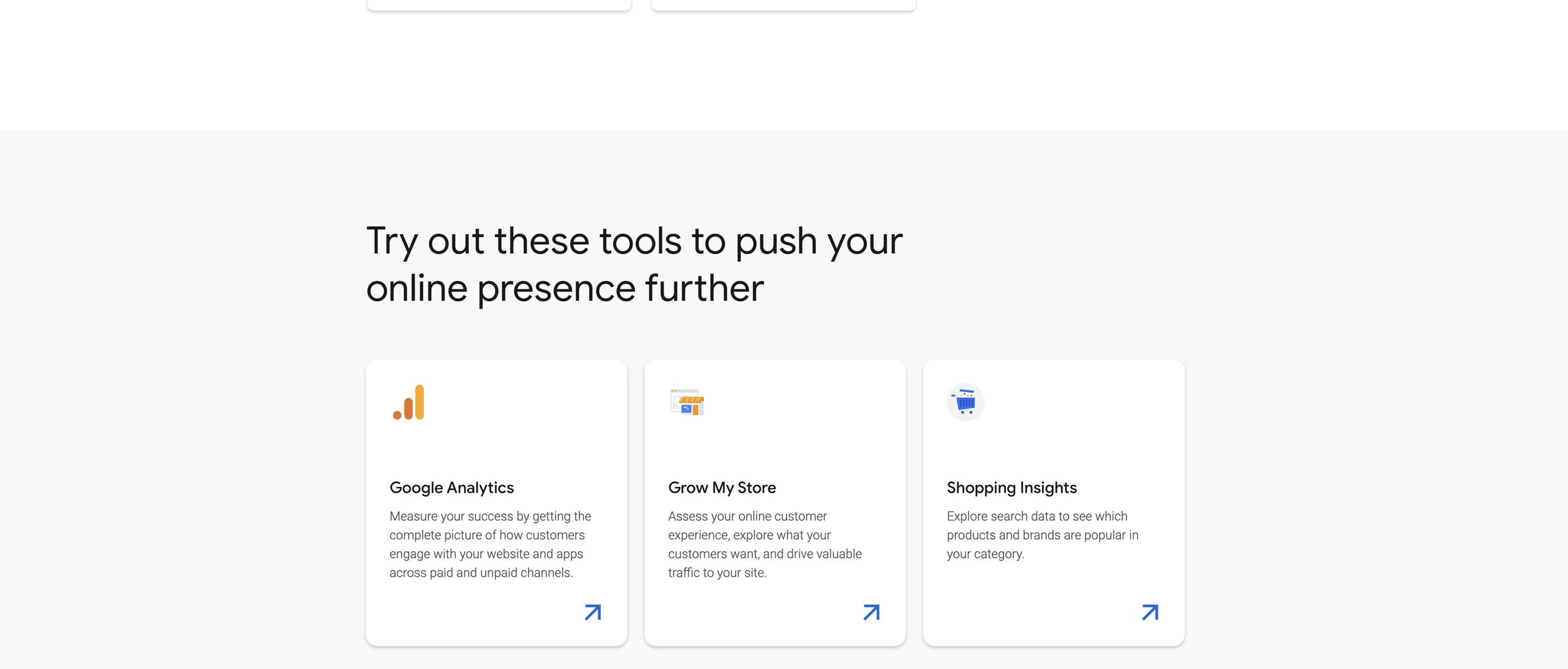
I reshaped the narrative strategy for Google for Retail as the platform evolved, writing everything from banners and individual modules to full product pages.
During one pivotal sprint, it became clear that a key page wasn’t working.
The easy move would have been to keep iterating on the existing design.
Instead, I suggested we start over.
I led a cross-functional storytelling workshop with creatives and client stakeholders. We stepped out of the product mindset and into the mindset of someone seeing the page for the first time.
Together, we asked:
What would this person naturally want to know?
What questions would they have?
What would make the product’s value immediately clear?
Then we answered those questions in plain, human language.
I translated the workshop into a new page architecture, turning those answers into positioning statements for each module.
Only once the narrative spine was solid did we return to the language, visuals, and supporting details.
The result was a fundamentally different page—clearer, more persuasive, and dramatically less constrained by the original design.
The Impact.
The work:
Transformed a jargon-heavy product page into a user-centered narrative
Shifted the team’s workflow from module-first to story-first
Established storytelling workshops as a repeatable kickoff model for future design exercises
Improved clarity and cohesion as the platform continued to expand
What started as a page rewrite became a process reset.
From that point forward, new design work could begin with something more useful than preferred language from a brief.
It could begin with the product story and the user journey.